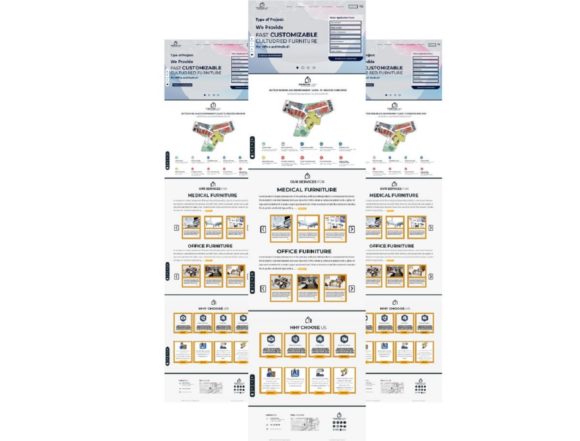
Professional Furniture Website Landing Page Templates
Creating a high-converting online presence for furniture brands requires more than just a gallery of products. It demands a seamless user experience that communicates quality, style, and functionality immediately. This is where specialized furniture website landing page templates come into play. They provide a foundational framework designed specifically for the visual and functional needs of home goods, interior design, and decor businesses.
Understanding the Core Components
A well-designed template isn't just a pretty layout. It's a strategic tool built to guide a visitor from casual browsing to confident action. For a furniture business, this means prioritizing large, high-quality imagery, clear product specifications, and an intuitive path to purchase or inquiry. The structure must balance aesthetic appeal with practical information, ensuring that the beauty of the pieces is matched by the clarity of their descriptions and the ease of navigation.
The true value of a professional template lies in its adaptability. It should serve as a starting point that can be molded to reflect a specific brand's identity—whether that's minimalist Scandinavian design, rustic farmhouse charm, or bold contemporary artistry. The template provides the scaffolding; the brand provides the soul.
Key Elements for a Successful Landing Page
- Hero Section: This is the first impression. It should feature a stunning lifestyle image of furniture in a curated setting, paired with a concise headline and a clear call-to-action, like "Shop the Collection" or "Get a Free Design Consultation."
- Product Showcase: This section moves beyond a simple grid. Consider interactive elements like 360-degree views, color/texture swatches, or "shop the room" modules where clicking on a sofa reveals the matching coffee table and rug.
- Trust Signals: Include customer testimonials, press logos, warranty information, and details about materials and craftsmanship. This builds credibility for high-ticket items.
- Clear Navigation: Menu items should be logical: Shop by Room, Shop by Style, New Arrivals, About Our Process. A prominent search bar is essential.
Adapting Templates for Different Business Goals
A single template can be transformed to serve vastly different business models. A direct-to-consumer brand might use it to drive immediate sales with prominent "Add to Cart" buttons and limited-time offers. In contrast, a bespoke furniture maker might use the same structure to highlight custom options, with a primary call-to-action being "Request a Quote" or "Schedule a Visit."
For interior designers or staging companies, the template can become a portfolio-centric landing page. The focus shifts from product sales to showcasing completed projects. The "Product Showcase" can become a "Featured Projects" gallery, and the call-to-action becomes "Book Your Consultation." The underlying template's grid system and image handling remain perfectly useful.
Practical Applications for Various Users
- For Marketers and Small Business Owners: Use the template's structure to run targeted campaigns. Create a dedicated landing page for a new sofa collection, using the hero section for a video ad and the product section to detail features and benefits relevant to the campaign's audience.
- For Bloggers and Educators: A furniture template can be repurposed as a resource hub. The hero section introduces a "Complete Guide to Choosing a Home Office Desk." The product showcase section becomes a curated list of recommended desks with affiliate links, and the trust section features expert tips and buying guides.
- For Freelance Designers: These templates are a massive time-saver. They provide a proven, professional layout that can be quickly customized with a client's brand assets—colors, fonts, and imagery. This allows the designer to focus on strategic customization rather than building a layout from scratch.
The Role of Brand Assets: Logos and Visual Identity
While the template provides the layout, your brand assets provide the identity. This is where specifications like logo file formats become critically important. A logo isn't just a graphic; it's the cornerstone of your visual communication.
For professional use across web and print, your logo must be versatile. This means having it available in Full Vector SVG and EPS formats. Vector files are mathematical, allowing them to be scaled to any size—from a tiny website favicon to a giant billboard—without losing a single pixel of clarity. This is non-negotiable for maintaining a sharp, professional appearance.
Additionally, having High Resolution raster versions (like PNGs with transparent backgrounds) ensures it looks crisp on high-density screens. Finally, a logo file that is Ready to Change Text is invaluable. This means the text layer is editable, allowing you to easily update a tagline or adapt the logo for different sub-brands without needing to redesign it entirely.
Streamlining Your Workflow with the Right Files
When you acquire a professional template or asset pack, you're investing in efficiency. A well-organized delivery, such as a single zip file containing all necessary components, is the first sign of a quality product. Inside, you might find an EPS file of the template's vector elements or your logo. The key benefit here is editability.
An EPS file can be opened in vector editing software like Adobe Illustrator. This allows you to easily resize and change colors of each and every shape as required. You can deconstruct the elements, combine different elements and create your own illustrations. This level of control is what separates a generic template from a truly customizable tool. It empowers you to adapt the assets to fit your exact vision, ensuring your final design is unique and aligned with your brand strategy.
Ultimately, the goal is to create a landing page that feels both effortless and intentional. By starting with a robust, industry-specific template and integrating strong, flexible brand assets, you build a digital storefront that doesn't just display furniture—it tells a story, builds trust, and makes the next step for the customer unmistakably clear. This practical approach saves time, maintains consistency, and focuses your energy on what matters: connecting your products with the right audience.