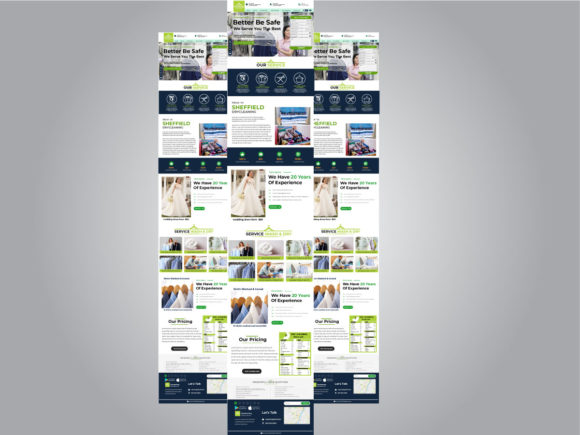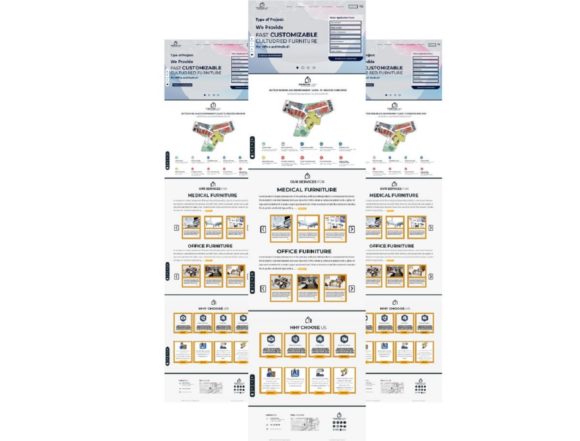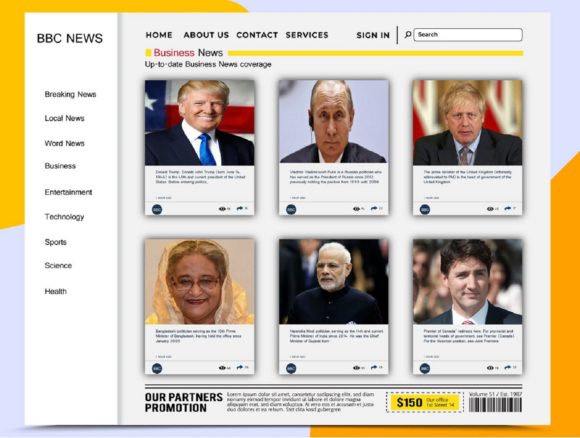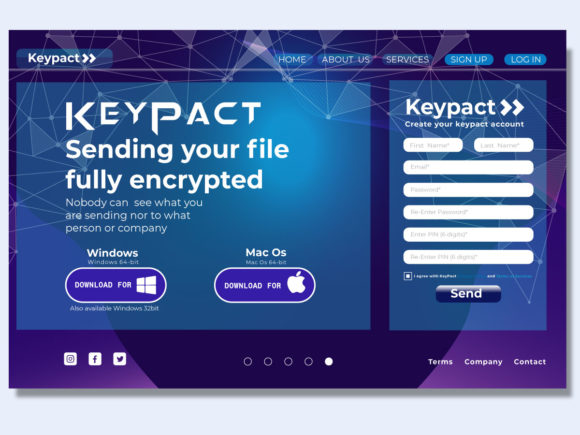
Effective Virus Landing Page Templates for Health & Safety
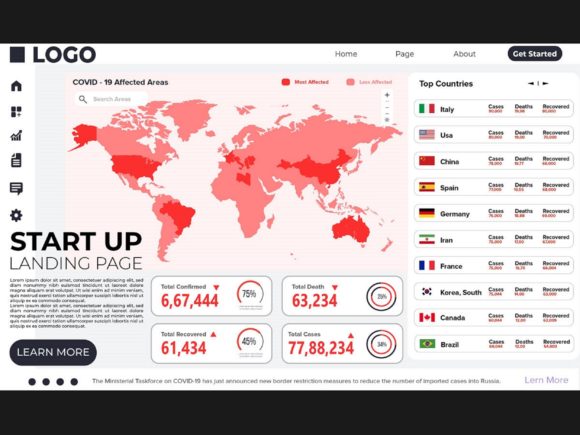
In the current digital landscape, establishing trust and clarity is paramount, especially when dealing with sensitive topics like public health or cybersecurity. A Virus Landing Page Template serves as a specialized tool designed to convey critical information swiftly and effectively. Whether you are a healthcare professional disseminating safety protocols, a software company warning users about malware threats, or a non-profit organization running a vaccination campaign, the visual language of your landing page must be precise. This is not just about aesthetics; it is about user psychology. When a visitor lands on a page regarding a "virus"—be it biological or digital—they are often anxious or seeking immediate solutions. A well-structured template ensures that your message is received without confusion, guiding the user toward the necessary action, whether that is downloading an antivirus tool, booking a medical appointment, or reading safety guidelines.
The practical application of these templates extends beyond mere information display. For marketers and entrepreneurs in the health sector, a Virus Landing Page Template can significantly reduce the bounce rate by providing an immediate visual context that matches the user's search intent. If a small business owner is launching a new line of sanitization products, a generic corporate page will not suffice. They need a layout that immediately signals hygiene, safety, and protection. These templates are typically designed with clean layouts, ample white space, and color schemes that evoke calmness or alertness (such as blues, greens, or urgent reds), depending on the specific call to action. By utilizing a pre-built structure, you save the immense time usually spent on wireframing and coding, allowing you to focus entirely on the content and the value proposition you are offering to your audience.
Establishing Visual Authority with Logo Specifications
A landing page is rarely complete without strong branding. This brings us to the critical component of the design assets: the logo. A logo is the anchor of your brand identity, and in a professional setting, compromising on its quality is not an option. The Logo Specification provided with high-quality design assets typically demands three non-negotiable criteria: Full Vector SVG EPS format, High Resolution, and the ability to easily change text. These specifications are not just technical jargon; they represent the difference between an amateur presentation and a professional one. A vector logo ensures that your branding looks crisp on a 4K monitor just as it does on a mobile screen, and it guarantees that printing physical materials, such as flyers for a health clinic, will result in sharp, clear edges rather than pixelated blurs.
For the creator or freelancer, understanding these specifications is vital for workflow efficiency. When you receive a file in EPS (Encapsulated PostScript) or SVG (Scalable Vector Graphics), you are receiving the master file. This allows for infinite scalability. Imagine you are a freelance designer working for a client who needs their safety campaign logo on a billboard. If you are working with a low-resolution JPG, you cannot scale it up without ruining the image. However, with a full vector file, you can scale the design to the size of a building without losing a single pixel of quality. This versatility is what separates standard assets from professional-grade tools.
The Power of Editable Vector Assets
The true value of a robust asset package lies in its editability. The prompt specifies that the files should be "Ready to Change Text" and compatible with standard software like Adobe Illustrator. This feature is a massive time-saver. For instance, if you are an educator creating a presentation on cybersecurity, you might need to tweak a generic "shield" icon to include the name of your specific school or department. With a fully editable vector file, you can select the text layer, type in your new information, and adjust the font size or color to match your institution's branding. This level of customization ensures that the final output feels bespoke, rather than "off-the-shelf."
Furthermore, the ability to change colors of each and every shape is a game-changer for brand consistency. Let's say you download a Virus Landing Page Template that features a medical kit icon in blue, but your brand identity is based on orange and grey. In a non-editable format, you are stuck with the blue icon, which clashes with your brand palette. However, in a vector EPS file, you can ungroup the shapes, select the specific blue elements, and recolor them to match your brand guidelines perfectly. This granular control allows you to maintain a cohesive visual identity across all your marketing materials, which is essential for building brand recognition.
Practical Scenarios for Entrepreneurs and Marketers
Consider the scenario of a startup launching a new remote work software that promises to protect user data from viruses and phishing attacks. They need a landing page that communicates security immediately. Using a Virus Landing Page Template, they can quickly deploy a professional-looking site that features security badges, encryption icons, and a clear call-to-action. The included vector assets allow them to customize these icons. They could take a generic "lock" icon, change its color to their brand's neon green, and perhaps combine it with a "checkmark" shape from another part of the asset library to create a custom "verified secure" badge. This ability to combine different elements and create your own illustrations is invaluable for standing out in a crowded market.
For bloggers and content creators, the benefit is slightly different but equally important. A health blogger writing about seasonal flu prevention might want to create a downloadable checklist. They can use the vector assets to design a header image for this checklist. By resizing the vector graphics without quality loss, they can use the same design element for a website banner, a social media post, and a printable PDF. This consistency reinforces their authority on the subject. The 100% Vector nature of the files ensures that whether the graphic is viewed on an Instagram story or a printed handout, the typography and imagery remain legible and professional.
File Management and Software Compatibility
The practicality of receiving a zip file containing these files cannot be overstated. It suggests a curated package, likely organized to help you find what you need quickly. In a fast-paced business environment, fumbling through disorganized assets is a productivity killer. A well-organized zip file usually contains distinct folders for different formats (e.g., SVG for web, EPS for print), making the implementation process smooth.
Compatibility with Adobe Illustrator is the industry standard, but it is worth noting that many modern tools can also handle EPS and SVG files. Software like Affinity Designer, CorelDRAW, and even some advanced online editors can open these vector formats. This means you are not strictly locked into an Adobe subscription to utilize these assets. However, having files that are explicitly optimized for Illustrator ensures that layers, text, and effects are preserved exactly as the designer intended, reducing the troubleshooting time often associated with file conversion issues.
Maximizing Value and Efficiency
The core promise of these templates and assets is efficiency. For a small business owner who is not a design expert, the prospect of creating a landing page and a logo from scratch is daunting. It involves understanding color theory, typography, layout grids, and coding. By utilizing a Virus Landing Page Template, you bypass the technical hurdles of layout design. You are essentially handed a blueprint that is already proven to work for this specific niche. You simply need to fill in your specific details. This "fill-in-the-blanks" approach does not mean the result is generic. Because the assets are easy to edit and customize, you have the freedom to inject your personality and unique value proposition into the design.
It is important, however, to approach these tools with a strategy. While the template provides the canvas, the content provides the conversion. A beautiful landing page with confusing copy will fail. Conversely, excellent copy on a poorly designed page will be ignored. These templates solve the design half of the equation, allowing you to devote your mental energy to crafting compelling headlines and persuasive body text. For educators and publishers, this means more time developing the curriculum or article content, and less time wrestling with CSS code or vector paths.
Limitations and Considerations
While the benefits are clear, it is helpful to acknowledge limitations. Pre-made templates, by nature, may require some compromise. You might find a layout that is 90% perfect but requires a section to be moved or deleted. This is where the "easy to edit" specification becomes crucial. If the template is not well-organized (e.g., if it is not fully layered), making structural changes can be difficult. Therefore, when selecting such assets, ensure they come with documentation or clear labeling. Additionally, because these templates are available to a wide audience, there is a chance that a competitor might use a similar design. This makes the customization phase—not just changing text, but adjusting layouts and color schemes—vital for differentiation.
In conclusion, the combination of a Virus Landing Page Template