Strategic Branding with Older Tree Pro Logo Templates: A Guide for Serious Businesses
In a marketplace saturated with fleeting digital aesthetics and minimalist trends, the visual language of stability, endurance, and deep-rooted history remains a powerful differentiator. For decision-makers in finance, law, consulting, and legacy management, establishing a brand identity that conveys trust is not merely a creative choice—it is a strategic imperative. This is where the Older Tree Pro Logo Templates offer a distinct advantage. By leveraging imagery that symbolizes growth and strength, businesses can anchor their visual identity in concepts that resonate deeply with a mature audience.
Understanding the Strategic Value of Arboreal Imagery
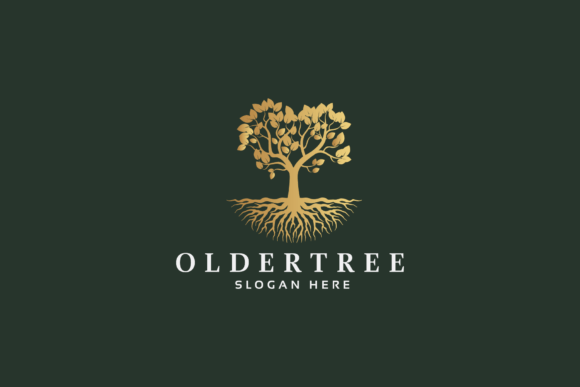
The decision to utilize a tree-based logo is rarely accidental; it is a calculated move to align the company’s visual output with its core values. The Older Tree Pro Logo Templates specifically focus on the "older" tree aesthetic—often featuring gnarled trunks, expansive canopies, and intricate branch systems. In the language of semiotics, this represents a "classic" or "iconic" status. For a financial group or an investment fund, this imagery suggests that the organization has weathered market storms and possesses the deep roots necessary to protect client assets.
However, relying on generic stock imagery can dilute this message. The strategic utility of these templates lies in their professional construction. They are not just clip art; they are designed as vector art, specifically the EPS 10 file format. This technical specification is crucial for scalability. Whether the logo is displayed on a massive corporate facade or a small business card, the integrity of the "majestic" trunk and branch details remains intact, ensuring that the brand looks as professional on a billboard as it does on a favicon.
Tactical Implementation and File Utility
When integrating the Older Tree Pro Logo Templates into your operational workflow, the technical deliverables dictate the ease of execution. The inclusion of the EPS 10 file is the cornerstone of this product’s utility. Unlike raster images (like JPEGs), which pixelate when enlarged, the EPS vector format allows for infinite scaling. This is essential for companies that require versatility across various media—from digital dashboards to printed stationery.
Furthermore, the templates feature editable RGB colors. This is a critical feature for maintaining brand consistency. While the default palette might be a natural green or earthy brown to represent the forest environment, a financial firm might need to adapt this to navy blue or charcoal grey to align with corporate standards. The ability to manipulate the color art directly means you do not need to hire a specialist vector artist for basic color adjustments. This streamlines the branding process, allowing for rapid prototyping and deployment of the visual identity across the company’s ecosystem.
Positioning for Specific Industries
The versatility of the tree symbol allows it to be adapted for various sectors, but it requires a thoughtful approach to positioning. A management consulting firm, for example, might use the "mosaic" style variations—where the tree is composed of geometric shapes—to symbolize the complex, interconnected nature of business systems. This moves the logo away from a purely naturalistic view and toward a more abstract, intellectual representation of the company’s problem-solving capabilities.
Conversely, a family office or an estate planning agency benefits from the "classic" interpretation of the older tree. Here, the focus should be on the trunk—the visual anchor that represents the family lineage or the foundational assets. When selecting a template from the set, prioritize designs where the trunk is prominent and the roots are visible, as this subconsciously communicates the concept of "groundedness" to potential clients. The goal is to create a visual identity that feels established, even if the company is a startup.
Customization for the "Studio" vs. "Corporate" Look
It is important to recognize that a logo functions differently for a creative studio than it does for a corporate entity. If you are a design studio or a creative agency, you might utilize the Older Tree Pro Logo Templates to create a brand that feels organic and artisanal. In this context, you might preserve the "natural" textures of the branch and trunk, perhaps using a wider color palette to signify diversity and creativity.
For a corporate financial firm or a large group, the approach must be more restrained. The strategy here involves simplification. You might select a template that offers a cleaner silhouette of the tree, removing excessive detail to ensure the logo remains recognizable at very small sizes. The "professional" aesthetic is achieved not by adding more elements, but by refining the existing ones. This distinction in application ensures that the same template set can serve a hobbyist blogger and a multinational fund, provided the strategic intent is clear.
Avoiding the Trap of Generic Branding
One of the primary risks in using template-based design is the potential for the brand to look generic or "off-the-shelf." To mitigate this, you must move beyond the default settings. The Older Tree Pro Logo Templates provide the foundation, but the strategy lies in the customization. Do not simply pick a tree and type in your company name. Instead, consider how the tree interacts with your typography.
For instance, pairing a majestic, ancient-looking tree symbol with a sleek, modern sans-serif font can create a compelling visual tension—suggesting a company that respects tradition but embraces modern efficiency. Conversely, pairing the tree with a serif font reinforces the "classic" and "established" messaging. This interplay between the icon and the text is where the branding becomes unique to your business. It transforms a standard template into a bespoke visual identity that communicates specific values to your target audience.
Long-Term Value and Asset Management
Investing in high-quality vector templates is an exercise in long-term operational efficiency. Because the Older Tree Pro Logo Templates include the source files, they serve as a living asset for your company. As your business evolves, you can return to the original EPS file to create new variations for sub-brands, departments, or specific campaigns. For example, a "forest" theme could be expanded where different trees represent different divisions of the company, maintaining a cohesive family of brands.
This approach supports long-term scalability. If your business expands into new markets or rebrands to target a different demographic, the core "tree" symbol can be reinterpreted without losing the equity you have built. The ability to edit RGB colors and manipulate vector points ensures that the logo can adapt to new design trends while retaining its fundamental structure. This adaptability is a key component of a robust brand strategy, ensuring that your visual identity remains relevant and effective for years to come.
Decision-Making Criteria for Implementation
Before finalizing your choice to use these templates, conduct a brief strategic audit. Ask yourself: Does the concept of "growth" and "stability" align with the primary value proposition of my business? If you are a tech startup focused on "disruption" and "speed," a tree logo might send the wrong message, implying slowness or rigidity. However, if your business is in wealth management, education, or sustainable goods, the symbolism is perfectly aligned.
Furthermore, consider the competitive landscape. If your primary competitors are all using abstract geometric shapes, utilizing an older tree motif can help you stand out by signaling a different set of values—perhaps more human, more patient, and more enduring. This differentiation is vital in crowded markets. By thoughtfully applying the Older Tree Pro Logo Templates, you are not just decorating a letterhead; you are making a statement about the nature of your enterprise and the promise you make to your clients.