Master Global Narratives with a World Map Google Slides Template
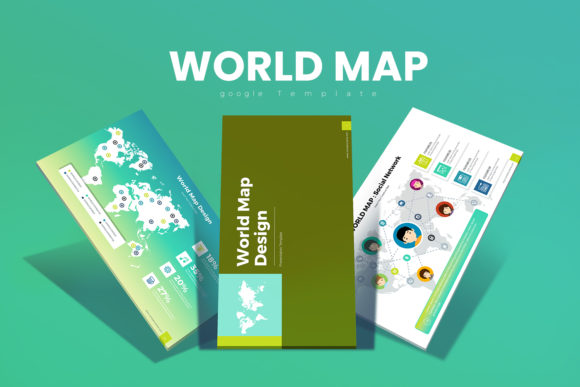
In an era defined by hyper-connectivity, the ability to visualize global data is no longer a luxury reserved for multinational corporations—it is a fundamental requirement for effective communication. Whether you are a startup pitching to investors about international expansion, a marketing agency presenting a global campaign strategy, or an educator explaining geopolitical shifts, the context of location is paramount. This is precisely where a high-quality World Map Google Slides Template transforms a standard presentation into a compelling visual story. It moves beyond simple bullet points to offer a spatial understanding of your data, making complex global concepts instantly accessible to your audience.
The Shift Toward Visual-First Communication
The modern professional landscape is witnessing a significant shift in how information is consumed. Attention spans are shorter, and the volume of data we process daily is immense. Consequently, the "death by PowerPoint" phenomenon—where audiences disengage due to text-heavy slides—has forced presenters to rethink their design strategies. We are currently seeing a trend toward visual-first communication. Maps, infographics, and vector elements are replacing paragraphs of text because they allow for faster cognitive processing.
A World Map Google Slides Template fits perfectly into this evolution. It acknowledges that geography is a primary organizing principle for business and politics. By utilizing a template that prioritizes clean, creative, and simple design, you align your content with modern user expectations. Audiences today expect sleek, professional aesthetics that mirror the interfaces of the apps they use daily. A cluttered, poorly designed map can confuse viewers, but a scalable, vector-based map ensures that your message remains sharp and legible, regardless of screen size or resolution.
Scalability and Versatility: Beyond Corporate Boardrooms
While these templates are undeniably flexible for corporate and business presentations, their utility extends far beyond quarterly reports. The versatility of a robust map template lies in its adaptability to various narratives. For instance, a travel blogger might use the map to chart a multi-country itinerary, visually engaging their followers with a story of movement and adventure. An educator might use it to teach history, overlaying dates and events onto specific regions to create an interactive learning experience.
The key feature that enables this versatility is scalability. A vector-based map allows you to zoom into specific continents or countries without losing image quality. This is crucial for detailed presentations where you need to distinguish between neighboring regions. Furthermore, the inclusion of 60 total slides in a comprehensive template package means you are not limited to a single world view. You can mix and match slides to focus on specific hemispheres, trade routes, or demographic data, ensuring that your presentation remains relevant to the specific topic at hand.
Designing for Impact: The Role of Clean Aesthetics
The effectiveness of a map-based presentation hinges on its design. A "unique" style does not necessarily mean chaotic or overly artistic; in the context of data visualization, uniqueness often stems from clarity and intelligent layout. A clean, creative template ensures that the map serves as a backdrop or a focal point without overwhelming the accompanying text or data points.
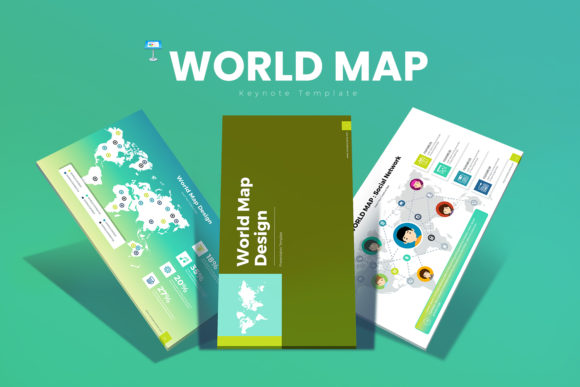
Modern templates, such as the World Map Google Slides Template, often come with light and dark versions. This is not merely a stylistic choice but a practical one. A dark background can make vibrant colors pop, ideal for high-impact presentations in dimly lit conference rooms, while a light background is often better suited for printed handouts or well-lit office environments. This duality ensures that the presenter can adapt to their environment, maintaining the professional and impressive style required to hold an audience's attention.
Technical Fluency: Editing and Customization
One of the most significant pain points in presentation design is the rigidity of static templates. Modern users demand control. The requirement for templates to be "fully editable" is a direct response to the need for personalization. When all elements are easily editable and customizable, it empowers the user to align the visual assets with their specific brand identity.
Imagine a scenario where a marketing team needs to highlight specific sales territories. With a static image, they would be forced to use crude drawing tools over the map. However, with a fully editable vector map, they can change the color of specific countries, resize regions to represent market size, or remove unnecessary geographical features to reduce clutter. This level of customization transforms the template from a generic graphic into a bespoke business tool. The inclusion of vector icons and map elements further enhances this, allowing presenters to add symbols for airports, shipping ports, or headquarters directly onto the map.
Optimizing Workflow with Google Slides
The choice of platform matters. Google Slides has become a staple in modern workflows due to its cloud-based nature and collaborative features. Unlike traditional desktop software, Google Slides allows multiple team members to work on a presentation simultaneously, leave comments, and track changes in real-time. This is particularly vital for global teams who may be working across different time zones.
A template designed specifically for Google Slides ensures compatibility and smooth performance. There is no risk of formatting errors that often occur when converting files between different software suites. By using a native Google Slides template, users benefit from a streamlined workflow where the focus shifts from technical troubleshooting to content creation. This efficiency is a critical component of modern business operations, where time is a scarce resource.
Practical Implications for Professionals and Creators
For the entrepreneur pitching a new app, a world map can visually demonstrate the total addressable market. For the freelancer, it can showcase a client roster, building credibility by illustrating a global footprint. For the non-profit organization, it can highlight areas of need or impact, driving emotional engagement with donors.
The practical implication of using a specialized template is credibility. In the professional world, perception often shapes reality. A presentation that utilizes high-quality, 16:9 aspect ratio graphics with appropriate typography signals competence and attention to detail. The use of free, accessible fonts ensures that the presentation looks consistent across different devices, avoiding the jarring experience of font substitution. By adhering to these standards, users ensure that their message is received with the gravity it deserves.
Future-Proofing Your Presentations
As we look forward, the integration of data and geography will only deepen. The rise of remote work and the "digital nomad" lifestyle means that location is becoming a fluid concept, yet one that remains central to business logistics and personal identity. A World Map Google Slides Template is not just a design asset; it is a framework for understanding the world.
By investing in a template that is scalable, multipurpose, and professionally designed, you are future-proofing your ability to communicate complex ideas. You are equipping yourself with a tool that can evolve with your needs, whether you are tracking a global supply chain or planning your next vacation. In a visual world, the ability to map your ideas is the ability to lead the conversation.